

The solar system is one of the most intriguing and widely studied topics in astronomy. Understanding the planets in order, their moons, and other celestial objects is essential for students, educators, and astronomy enthusiasts. This guide provides informational insights into the solar system, explaining its structure, components, and scientific significance.
Educational platforms and online communities, much like primogaming88 and primo gaming for gaming knowledge, help learners engage interactively with complex topics like astronomy.
What Is the Solar System?
The solar system consists of:
● The Sun: The central star providing light, heat, and energy.
● Planets: Eight major planets orbiting the Sun.
● Dwarf planets: Smaller celestial bodies like Pluto and Eris.
● Moons: Natural satellites orbiting planets.
● Asteroids and comets: Rocky and icy objects scattered throughout the system.
Studying the solar system allows for a better understanding of planetary formation, gravitational forces, and celestial dynamics, similar to how structured platforms like primogaming teach systematic learning.
The Planets in Order
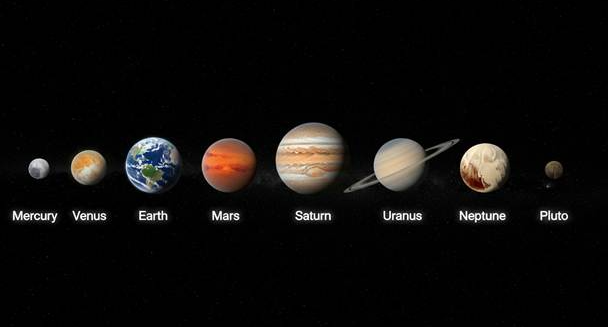
1. Mercury
● Smallest planet and closest to the Sun.
● Experiences extreme temperature variations due to its thin atmosphere.
2. Venus
● Similar in size to Earth, often called Earth’s “sister planet.”
● Dense carbon dioxide atmosphere creates extreme greenhouse effect.
3. Earth
● The only known planet to support life.
● Contains liquid water and a balanced atmosphere.
4. Mars
● Known as the Red Planet due to iron oxide on its surface.
● Features include volcanoes and canyons, with two small moons: Phobos and Deimos.
5. Jupiter
● Largest planet in the solar system, a gas giant.
● Hosts over 95 moons, including Ganymede, the largest moon in the solar system.
6. Saturn
● Famous for its ring system composed of ice and rock.
● Gas giant with many moons, including Titan, which has a dense atmosphere.
7. Uranus
● Ice giant with a tilted rotational axis of 98 degrees.
● Appears blue-green due to atmospheric methane, with 27 known moons.
8. Neptune
● Farthest planet from the Sun.
● Known for strong winds and storms, with 14 known moons including Triton.
Dwarf Planets and Other Celestial Objects
● Pluto: Classified as a dwarf planet due to its orbit.
● Eris, Haumea, Makemake: Other dwarf planets mostly in the Kuiper Belt.
● Asteroids: Rocky bodies primarily located between Mars and Jupiter.
● Comets: Icy bodies that develop tails when near the Sun.
Studying these smaller objects provides insights into the early formation of the solar system and ongoing celestial processes. Interactive resources, like primo gaming 88 for gamers, show how structured, topic-specific platforms can improve understanding of complex systems, including planetary science.
Informational Insights About Moons
Moons play critical roles in the solar system:
● Earth’s Moon: Stabilizes Earth’s tilt and affects tides.
● Jupiter’s Moons: Includes Ganymede, Callisto, Io, regsistered business address and Europa, studied for volcanic activity and potential subsurface oceans.
● Saturn’s Titan: Contains lakes of methane and a thick atmosphere, offering information on planetary geology and potential habitability.
Understanding moons allows researchers to analyze planetary formation, geology, and potential conditions for life, much like structured educational systems teach mastery of different topics.
How to Remember the Planets in Order
One effective mnemonic is:
● “My Very Educated Mother Just Served Us Noodles”
(Mercury, Venus, Earth, Mars, Jupiter, Saturn, Uranus, Neptune)
This technique helps learners retain factual information about the planets’ sequence efficiently, just as learning platforms like primogaming88 help users retain structured knowledge effectively.
FAQs About the Solar System
Q1: How many planets are in the solar system?
A: There are eight recognized planets orbiting the Sun.
Q2: What is the largest planet?
A: Jupiter, with a diameter of approximately 142,984 km.
Q3: Why is Pluto classified as a dwarf planet?
A: Pluto does not dominate its orbital region, so it is classified as a dwarf planet.
Q4: What role do moons play in planetary systems?
A: Moons stabilize planetary rotation, influence tides, and can impact atmospheric and geological conditions.
Importance of Studying the Solar System
Studying planets, moons, and other celestial objects:
● Provides understanding of planetary formation and evolution.
● Explains gravitational interactions and orbital mechanics.
● Offers insights into space exploration, planetary atmospheres, and habitability.
● Encourages curiosity and scientific thinking for learners of all ages.
Platforms like SnapchatPlanetsInOrder.com, and even structured learning communities like primogaming88, provide accessible and structured ways to engage with educational content effectively.
Conclusion
The solar system is a complex and educationally rich region of space, containing planets, moons, dwarf planets, and other celestial objects. Understanding the planets in order, their characteristics, and their moons provides a foundation for learning astronomy.
Websites like SnapchatPlanetsInOrder.com serve as informational resources for learners, while examples from structured communities like primogaming88 and primo gaming 88 show how organized platforms support the acquisition and retention of complex knowledge.
By studying the solar system, learners gain informational insights into how our universe works, preparing them for further exploration in astronomy and space science.