

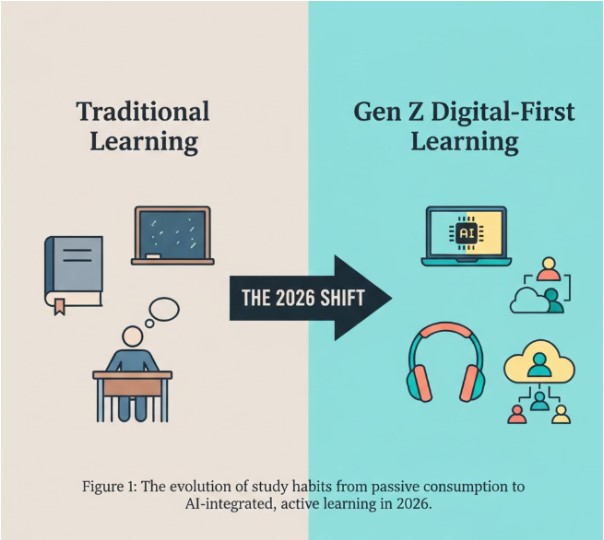

The classroom experience for a high school senior today is vastly different from that of their parents or even older siblings. This isn’t just about new textbooks; it’s a fundamental shift in how an entire generation approaches knowledge, skill acquisition, and ultimately, success. Generation Z, often defined as those born from the mid-1990s to the early 2010s, are digital natives in the truest sense. They’ve grown up with the internet, smartphones, and instant access to information, shaping a learning style that prioritizes relevance, efficiency, and real-world application. Understanding this revolution isn’t just for educators; it’s for anyone looking to connect with, mentor, or even simply understand the leaders of tomorrow.
This generation thrives on immediacy and personalized experiences, which directly impacts their study habits. Gone are the days of rote memorization as the primary path to learning. Instead, Gen Z students often seek out comprehensive academic support that adapts to their individual needs, often leveraging platforms like MyAssignmentHelp to navigate complex subjects or manage demanding schedules. They value resources that can break down intricate concepts into digestible formats, helping them grasp the ‘why’ behind the ‘what’ and apply it effectively. Their academic journey is less about passively absorbing information and more about actively constructing their own understanding through diverse digital avenues.
What truly sets Gen Z apart is their innate ability to curate their own learning paths. They aren’t waiting for information to be presented; they’re actively seeking it out, cross-referencing sources, and engaging with content in dynamic ways. This often involves toggling between video tutorials, interactive simulations, collaborative online documents, and quick searches to fill knowledge gaps. They’ve become adept at filtering vast amounts of digital noise to find precisely what they need, often valuing practical application and problem-solving over theoretical exposition. This self-directed approach demands a different kind of educational framework, one that supports exploration rather than rigid adherence to a single curriculum.
The Hyper-Personalized & AI-Enhanced Learning Landscape
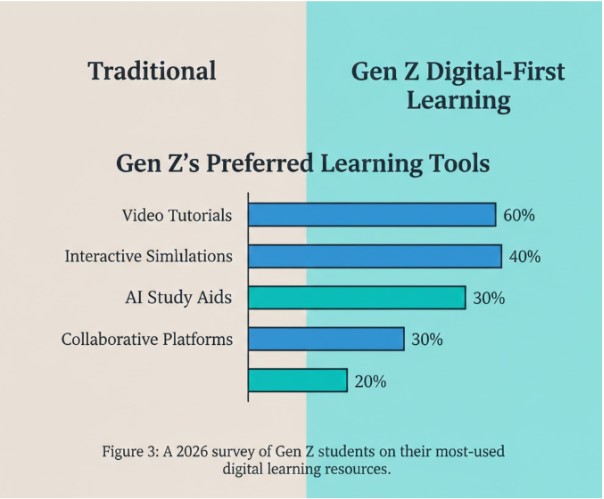

One of the most significant shifts in How Gen Z Learning Habits are Reshaping Modern Education is the expectation for personalization. Growing up with algorithms that suggest movies, music, and products tailored to their tastes, Gen Z anticipates a similar level of individualization in their education. This isn’t just about choosing electives; it’s about learning at their own pace, through their preferred medium, and with content directly relevant to their future goals. Artificial intelligence is playing a crucial role in meeting this demand. AI-powered platforms can identify a student’s strengths and weaknesses, suggesting customized learning modules, practice problems, or even alternative explanations for difficult concepts. This might mean an AI tutor guiding them through a complex math problem one moment, and a personalized reading list for a history project the next. This constant feedback loop and adaptive content make learning far more engaging and effective for a generation accustomed to on-demand experiences.
Collaborative, But Also Independent: The Social Paradox of Study
Gen Z is often seen as highly collaborative, constantly connected through social media and group chats. In academic settings, this translates into a strong preference for working in teams, sharing notes, and discussing assignments online. Platforms like Google Docs, Slack, and even Discord servers become virtual study halls where ideas are exchanged and problems are collectively solved. However, this collaboration exists alongside a fierce sense of independence. While they might seek peer input, they ultimately want to arrive at their own conclusions and demonstrate their unique understanding. They appreciate tools that facilitate group work but also provide individual tracking and accountability. The challenge for educators and support systems is to foster this collaborative spirit without diminishing the importance of independent thought and original work.
Micro-Learning and the “Snackable” Content Craze
The attention economy has profoundly influenced Gen Z’s study habits. Accustomed to TikTok videos, Instagram reels, and quick informational snippets, their brains are wired for “micro-learning.” This means breaking down complex subjects into smaller, digestible chunks that can be consumed quickly and efficiently. Think short explainer videos, infographics, interactive quizzes, and concise summaries rather than lengthy lectures or dense textbooks. While this approach can sometimes be criticized for lacking depth, Gen Z students are adept at stitching together these “snackable” pieces of information to form a comprehensive understanding. The key is that each piece must be relevant, engaging, and directly applicable. Educational content providers that embrace this format, offering modular lessons and on-demand tutorials, are the ones winning the attention of this generation.
Skill-Based Learning Over Pure Knowledge Acquisition
For Gen Z, education isn’t just about accumulating facts; it’s about acquiring marketable skills. They are acutely aware of the rapidly changing job market and understand that traditional degrees alone may not be enough. Consequently, their study habits are geared towards practical application, problem-solving, critical thinking, and digital literacy. They prioritize courses and extracurriculars that offer hands-on experience, coding skills, data analysis, or creative design. Certifications and badges that validate specific competencies are often seen as equally, if not more, valuable than traditional academic achievements. This pragmatic outlook means they’re constantly asking, “How will this help me in the real world?” and tailoring their learning to build a portfolio of usable skills rather than just a transcript of grades.
From “Sage on the Stage” to “Guide on the Side”: The Evolving Role of Educators
This revolution in learning habits demands a corresponding evolution in teaching methodologies. The traditional model of a teacher delivering information from the front of the classroom is becoming less effective for Gen Z. Instead, educators are increasingly becoming facilitators, mentors, and guides. Their role is to curate resources, foster critical thinking, encourage collaboration, and help students navigate the vast sea of information available to them. This might involve setting up project-based learning scenarios, guiding students through complex research, or even teaching them how to effectively evaluate online sources for credibility. The most successful educators understand that they are no longer the sole source of knowledge but rather crucial navigators in a student-driven learning journey.
The Future is Flexible, Personalized, and Purpose-Driven
The Gen Z learning revolution is more than a fleeting trend; it’s a fundamental shift that will continue to shape education for decades to come. These future leaders are demanding a system that is flexible, highly personalized, and directly aligned with their aspirations. They are teaching us that effective learning is about active engagement, critical evaluation, and the relentless pursuit of skills that matter in an ever-evolving world. For institutions, businesses, and individuals hoping to connect with this powerful generation, understanding and adapting to these redefined study habits is not just an option—it’s an imperative. By embracing their digital fluency, their collaborative spirit, and their hunger for relevant, skill-based knowledge, we can empower Gen Z to truly lead the future.
Frequently Asked Questions
- How does Gen Z’s study style differ from Millennials?
While Millennials pioneered digital collaboration, Gen Z takes it a step further with “hyper-independence.” They prefer setting their own pace using AI and on-demand video rather than waiting for group consensus. They are more likely to treat technology as an integrated part of their thought process rather than just a tool. - Is Gen Z really abandoning traditional four-year degrees?
Not entirely, but the focus has shifted. In 2026, many students are choosing “stackable credentials”—shorter, skill-based certifications—alongside or even instead of traditional degrees. For them, the priority is marketable skills and ROI (Return on Investment) over the classic college “experience.” - What role does AI play in a modern student’s daily routine?
AI is often used as a 24/7 personal tutor. Instead of searching Google for hours, students use AI to summarize dense research, generate practice quizzes, and explain complex math formulas. It has moved from being a “novelty” to a core component of academic efficiency.
- How can parents support a Gen Z student’s learning path?
Support today looks like providing “guided autonomy.” Parents can help by encouraging digital literacy and critical thinking—teaching students how to verify the AI-generated info they find.
About The Author:
Ella Thompson is an education consultant and freelance writer specializing in modern pedagogy and digital learning trends. With a background in academic counseling, Ella explores how technology bridges the gap between traditional classrooms and the fast-paced digital world. Passionate about empowering the next generation of leaders, Ella frequently collaborates with MyAssignmentHelp to provide students with the strategic tools and insights needed to navigate the complexities of higher education in the 21st century.