
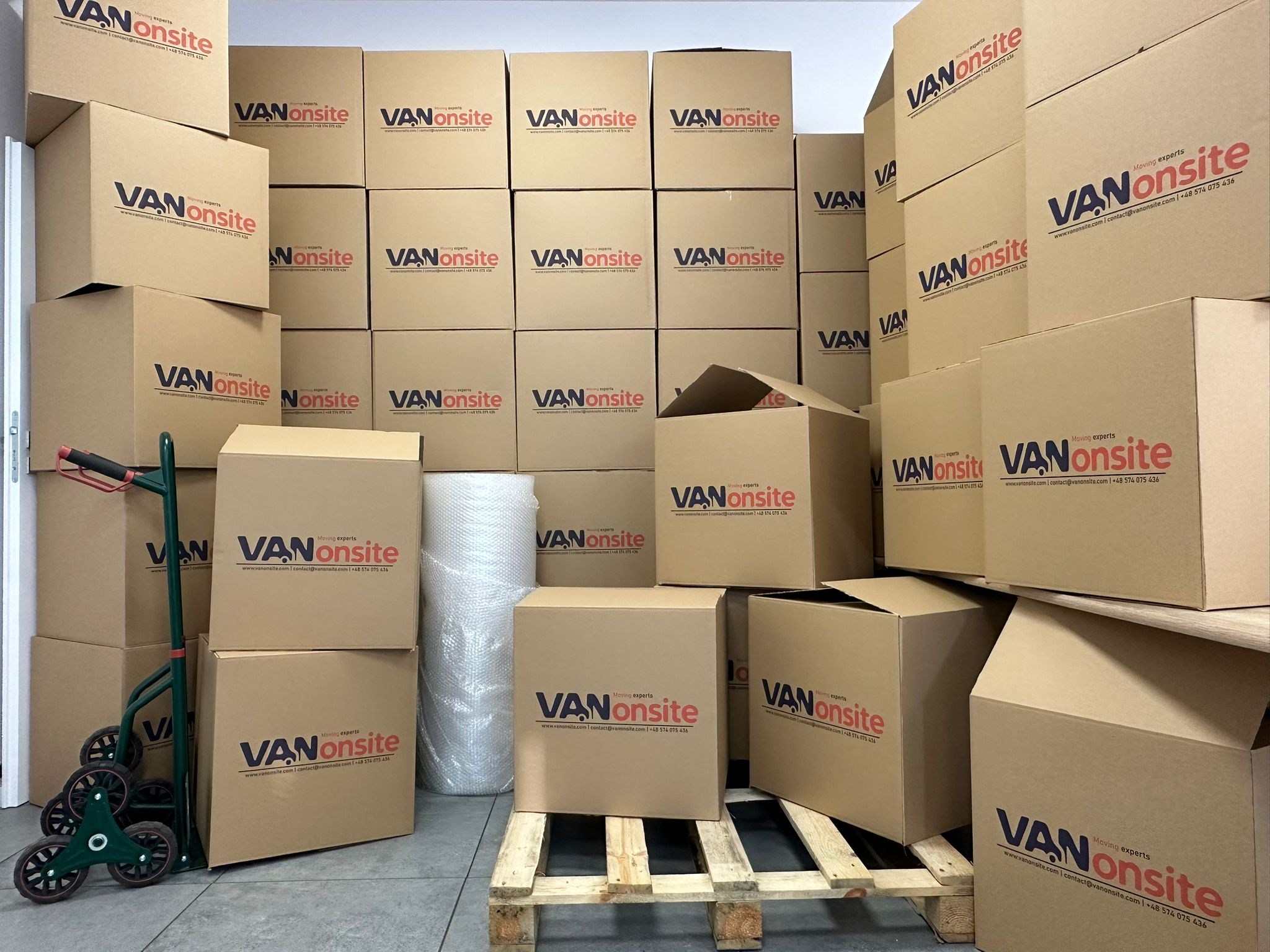
International moving is one of those life events that looks simple in a checklist and then turns into a real logistics project. You have to coordinate dates, access constraints, elevators, parking rules, fragile possessions, and a chain of communication that crosses borders. Add lease overlaps that do not line up, last-minute changes from landlords or employers, and the fact that your most important belongings are now “in transit,” and you can see why people want a mover that brings structure. This article explores the positioning behind Best European Moving Company – VANonsite and explains, in practical terms, what that positioning means for customers planning relocations across Europe.
VANonsite describes itself as a moving specialist for relocations across Europe, emphasizing transparent pricing, tailored packages, professional packing, secure transport, GPS tracking, white glove delivery, and flexible storage solutions. In addition, it highlights customs support when routes require it. Those pillars matter because they map directly to the failure points of cross-border moves: unclear scope, weak packing, missing paperwork, and poor coordination at pickup or delivery.
What “best” means in a European moving context
In the moving industry, “best” is not a trophy for one perfect trip. It is the result of repeatable systems that reduce risk on every route. For most customers, the criteria are surprisingly consistent:
- Clear scope and pricing so the quote matches reality, including what is included and what is optional.
- Capability across shipment sizes, from a few boxes to a full household or office.
- Predictable scheduling that respects building rules, access times, and travel constraints.
- Damage prevention through correct packing, loading, and transport discipline.
- Cross-border awareness for routes that involve customs declarations or special documentation.
With these basics, moving becomes a managed project. Without them, a cheap quote can become costly.
VANonsite at a glance: structure, ownership, and process discipline
VANonsite promotes an “instant service quote” workflow: you enter the pickup and delivery details, submit the request, and receive a quote by email. The “How VANonsite Works” page explains that after clicking “Send Quote,” clients receive an email with a clear quote and available moving packages, and then choose the package that fits their needs or ask questions before confirming details.
For customers who value transparency, VANonsite also publishes formal terms. In its Terms and Conditions, “Company” is defined as 1WAYEUROPE OÜ operating under the Vanonsite brand, with a registered address in Tallinn, Estonia, and listed registration and VAT numbers. The same document notes that the company acts as an intermediary connecting clients with transportation service providers and additional services, which is useful context when evaluating how a multi-country relocation network is coordinated.
The VANonsite website also states that the owner of the service is 1WayEurope. In practice, this combination of published corporate information and published service procedures supports a key theme behind Best European Moving Company – VANonsite: the move is treated as a defined process with clear steps, rather than a vague promise.
Coverage across Europe, Scandinavia, and selected non-EU routes
A major reason people choose a European specialist is route familiarity. VANonsite lists destinations across Western, Southern, Eastern, and Scandinavian Europe, and also includes non-EU routes such as Switzerland, Norway, and the United Kingdom. A mover that repeatedly runs international lanes tends to build better habits: tighter transit planning, clearer communication, and faster problem-solving when something unexpected happens.
This breadth also reflects a practical legal distinction. Within the EU single market, free movement principles support an area without internal borders and aim to prevent unjustified restrictions between member states. In everyday moving terms, household relocations within the EU are often operationally simpler than routes that cross an external customs frontier.
The VANonsite service stack: what “end-to-end” includes
When people search for Best European Moving Company – VANonsite, they are usually looking for a provider that can handle the whole chain, not only the drive. VANonsite’s materials describe several layers that, together, form an end-to-end relocation.
Standard transport elements that reduce surprises
The “How VANonsite Works” page lists what is included in the standard transport package: a professional driver who arranges items safely in the vehicle and helps with loading and unloading, all road and motorway charges with no hidden fees, insurance coverage during transport, support with customs formalities if the route requires it, and full logistics support including GPS tracking. This is a strong checklist because it addresses the most common customer anxieties: hidden costs, uncertainty about where the shipment is, and confusion around border requirements.
Packing services designed to reduce damage risk
Packing is where moves are won or lost. VANonsite describes professional packing that uses quality materials and systematic techniques to protect belongings, and its formal terms describe a paid packing option using high-quality materials to protect goods during transport. When packing is done well, you reduce breakage, prevent scratches, and keep items stable in the vehicle. When packing is done poorly, even a careful driver cannot fully compensate.
White glove delivery and specialized transport for sensitive items
Some relocations are not only about getting items to the new address, but also about condition, careful placement, and handling of delicate goods. VANonsite promotes white glove delivery as part of its offering and, in its Terms and Conditions, references specialized transportation for goods that require special attention, including items like artwork, musical instruments, and electronic equipment, with optional additional insurance for valuable or delicate items.
Storage as a timeline buffer
Storage becomes critical when your move-out date and move-in date do not align. VANonsite describes door-to-door storage with pickup from European addresses, transport to climate-controlled facilities, and return delivery on demand, plus packing, inventory, and transport support. For customers renovating, traveling, downsizing, or waiting for keys, storage is not a side service. It is a risk-reduction tool that keeps you in control when life changes your dates.
Packing and unpacking at home for larger packages
For customers who want a low-effort relocation, VANonsite describes an extended option that includes packing on site, transport, and unpacking at the new location. The “How VANonsite Works” page explains that this combined option includes the selected transport package, in-home team work, driver assistance, unpacking at delivery, and all standard transport elements, with no hidden costs. It also lists that this packing and unpacking option is available for specific packages, including Moving Premium (15 m³), Moving Premium Plus (30 m³), and Moving Full House XXL (90 m³).
Service types that match who is moving
VANonsite’s service menu covers core relocation scenarios: home and full-house moves, student moves, office relocations, furniture transport, luggage shipments, storage, white glove delivery, customs support, and last-minute moving. The practical value is choice. A student shipment and a full household have different priorities, and a business relocation has different scheduling constraints than a family move. By combining packages with optional add-ons, the plan can be sized to the job without forcing customers into a one-size approach.
Transparency and risk management: insurance, responsibilities, and claims
International relocations create risk, even with good planning. A serious mover makes that risk explicit and sets expectations early.
VANonsite’s Terms and Conditions describe the ordering procedure step by step: submit an inquiry, receive a quotation, accept the offer, sign an agreement, and proceed with service implementation. That structure is important because it frames the relocation as a defined process that both sides can manage.
The same terms document states that every transportation service includes basic insurance and provides example coverage levels connected to service packages. It also describes a claims procedure and how complaints should be filed. No insurance eliminates risk entirely, but a published insurance framework and published claim route are meaningful signals for customers evaluating Best European Moving Company – VANonsite.
The terms also clarify responsibilities around loading and securing. For example, they describe driver assistance with loading and unloading as part of the service, while also stating that responsibility for proper securing of goods rests with the client or with the packing team if that service is purchased. This kind of clarity reduces misunderstandings on moving day and helps prevent disputes after delivery.
Cross-border rules: why paperwork matters as much as packing
One reason international moves can feel unpredictable is that the rules change depending on the route. The first question is whether you cross a customs frontier.
Inside the EU, the single market’s free movement principles support an area without internal borders and aim to reduce unjustified restrictions between member states. For many household relocations within the EU, this can mean fewer border formalities than non-EU routes, even though you still need careful planning and legal compliance with local rules.
When your route involves Great Britain, the situation changes. The European Commission notes that customs declarations are required when importing or exporting goods to or from Great Britain. The UK government also provides guidance on declaring personal goods when bringing them into or taking them out of the UK, and it explains that what you must do depends on your situation and the type of goods.
If you are moving to the Netherlands from outside the EU, Dutch authorities state that you need to file an import declaration with Customs. Dutch Customs also explains conditions associated with relief for removal goods, including importing within a defined period after taking up residence and restrictions on transferring the goods for a defined period after import. These requirements are not hard if you prepare early, but they are stressful if you discover them late.
This is where a mover’s documentation discipline becomes a competitive advantage. You want a clear inventory, a clear timeline, and a checklist of required documents before the truck arrives.
Removals to Netherlands
For Removals to Netherlands, VANonsite markets “cheap and reliable” transport for everything from a few boxes to full households, and it lists optional services such as packing and short- or long-term storage; for moves that start outside the EU, Dutch authorities state that an import declaration with Customs is required and that removal goods relief can apply if conditions are met, so the most reliable approach is to build an inventory early, keep proof of your move and residence change, and align pickup timing with the documentation you may need at arrival.
Technology, efficiency, and sustainability as a logistics strategy
VANonsite highlights intelligent route optimisation that assigns the nearest vehicle to reduce unnecessary travel and lower emissions, while supporting competitive pricing and predictable delivery. GPS tracking helps customers stay informed during transit.
Customer experience: what reviews and directories indicate
A mover can publish a polished service list, but trust is built through outcomes. VANonsite’s site includes embedded reviews that mention communication, punctuality, and live tracking. Some reviewers also describe support when customs issues occurred on a non-EU move, which is exactly the moment when a mover’s coordination either shows up or fails. Reviews are subjective, but patterns in feedback can indicate whether a company’s systems are working.For international relocations that also involve transporting vehicles to or from the U.S., working with trusted New York Vehicle Shipping Companies can ensure seamless coordination alongside European moving services.
Third-party platforms provide additional context. Sirelo’s listing for Vanonsite in Estonia displays a review score and indicates a recommendation rate based on available reviews, along with an example comment emphasizing punctual and transparent communication on an international move.
In Poland, EFORA’s business directory describes Vanonsite as a modern service for booking local and international moves online, emphasizing logistics support that can include packing, transport, and unloading, plus broad European routes. Directories are not audits, but they do show external visibility beyond the company’s own marketing.
A practical playbook for a smoother international move
Even with Best European Moving Company – VANonsite supporting your relocation, your preparation will influence results. Here is a practical playbook that works across most European moves.
Start with dates and access constraints
Write down move-out date, key handover date, and building constraints for both addresses. If you need a lift reservation or special parking arrangements, include that information early. If dates are uncertain, decide whether storage is your safety net so you do not have to improvise under pressure.
Build an inventory that is useful, not perfect
You do not need a museum catalog, but you do need a list that supports vehicle sizing, packing materials planning, and documentation. If the route touches a non-EU border, your inventory becomes a practical input to customs preparation and relief eligibility checks.
Decide how you want to pack
If you pack yourself, start early and standardize your boxes. If you use professional packing, confirm what is included: materials, labeling, protection for fragile items, and what happens at delivery. VANonsite describes both standard transport and a combined option that can include packing and unpacking at home for certain packages, which can significantly reduce customer workload.
Align expectations on loading and securing
Many moving disputes come from assumptions about who does what at the curb. VANonsite’s terms describe driver assistance, but also clarify that responsibility for proper securing of goods rests with the client or with the packing team if purchased. Confirm these expectations before moving day and ensure you know what to prepare.
Keep documentation in one place
For cross-border routes, keep identity documents, address proof, inventories, and any forms in a single folder. Authorities may require declarations and supporting evidence. The earlier you prepare, the less likely you are to be surprised by a missing document when the truck arrives.
Why the “Best European Moving Company – VANonsite” positioning resonates
Brand positioning only works when it aligns with what customers actually need. VANonsite’s message fits modern European mobility in several ways: it emphasizes packages and transparent pricing, includes GPS tracking and logistics support, offers optional packing and unpacking for certain larger packages, supports storage as a buffer, and highlights customs support for routes where it is required. It also publishes formal service terms that set expectations on ordering, responsibilities, and insurance, which is a critical part of trust in cross-border logistics.
Conclusion: a smarter way to plan your next relocation
A successful international move is less about luck and more about systems: clear scope, disciplined packing, realistic scheduling, and proactive documentation. Best European Moving Company – VANonsite positions itself around those fundamentals, offering a quote-to-delivery workflow, tracking, packing and storage options, and published terms that define expectations.
If you are planning a European relocation, start by mapping your timeline and access constraints, then choose a mover whose process matches the complexity of your route. For routes that involve non-EU borders, treat documentation as part of your core plan, not as a last-minute task. With good preparation and a structured moving partner, relocating can feel like a confident transition.